Epic snowfall across North Carolina meant another week of online worship!
Watch the recording by clicking the button, and Fr. Cathie’s sermon is below…
St. Paul’s announcements:
Fr. Cathie’s sermon:
As part of my job, I visit lots of churches - big ones and little ones, churches in cities and small towns and way down country roads.
Some are struggling , some are thriving, but all seem to have a few things in common: usually, a lot of care goes into worship, and this shows - liturgy is well-done, music is beautiful, there are flowers and silver on the altar and bulletins in the pews.
Some kind of formation happens at every church I see - there is Bible study or a lunch bunch or an adult forum before or after the service, and if there are any young people at all, there is Sunday school and youth group.
And finally, every church I know participates in some kind of outreach - they feed the hungry or help the homeless or pack backpacks for kids who don’t have enough to eat or tutor children after school or support other ministries in their area. Or sometimes, all of the above.
These are all good things. They are wonderful things. It is amazing to me that so many churches in so many places manage to do so many things, especially since so many of them do so with dwindling resources, both human and financial.
And that, I have to say, is something else I see in almost every church I visit:
there is not enough of what there once was - people, especially young people, time for spending at church and on church related activities, and money.
A lot of people in a lot of churches are tired. They are dedicated, they are faithful, but they are tired.
And something about how we are and who we are as the church has changed in a way that it has never changed before, some things are just not happening the way they used to, and somewhere deep inside, all of us know this.
We may not know why. We may not know how. But we know that fewer of us are spending time, energy, and money on keeping the church alive.
So those of us who are still here have to do more of all of this.
I wonder sometimes, what would happen if we just stopped.
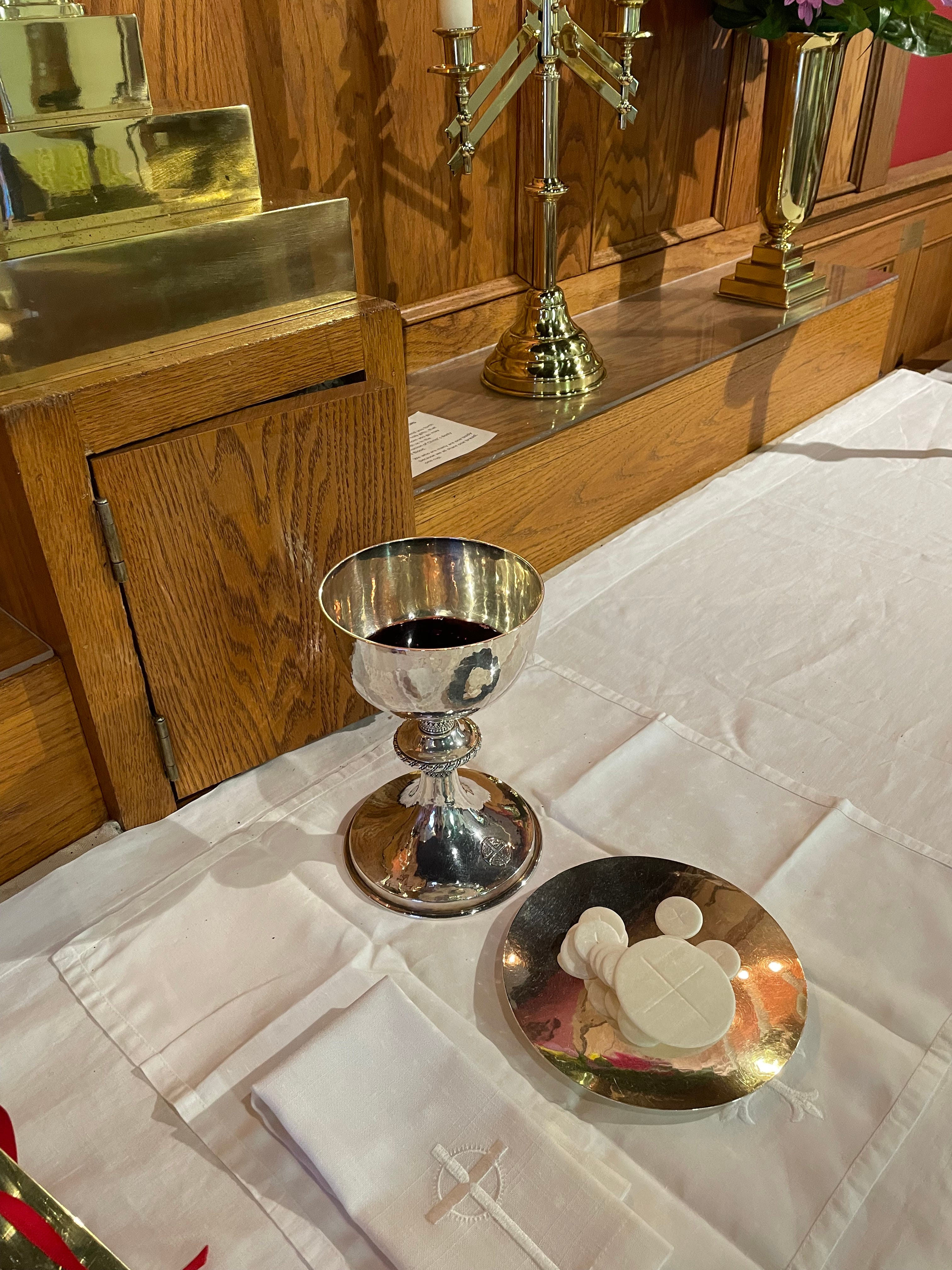
It’s kind of shocking, really, but what if we just stopped doing all this work to make church happen?
If we no longer had bulletins or hymns or coffee or sermons or Christmas Eve or Easter or Lent?
What if no Bibles were studied and no children learned the parable of the lost sheep and no hungry people were fed or sorrowful people comforted?
What would we miss if we no longer kept the seasons or the rituals or the feasts or the traditions, the work of our life as the church?
And even more importantly: what would be missing from the world?
Today’s Gospel story is a hard one. At least I think it is.
This section of Matthew is well known as the Sermon on the Mount.
It begins with the Beatitudes:
‘blessed are the poor, blessed are the hungry’,
and it goes on, the chapter ending with Jesus saying
Turn the other cheek
and
Love your enemies
and finally concludes with the words,
Be perfect, as your heavenly Father is perfect.
This is a tall order from Jesus - asking us to ponder behavior that tests our very limits in terms of relating to one another, and it sets an impossible standard.
Yet Jesus says that this is what he expects.
We are left, reading these words, with either believing Jesus doesn’t really mean them - that he is exaggerating to point out how important it is that we love each other and treat each other well.
Or else that he does really mean them,
and therefore each and every one of us falls woefully short of the Christian ideal of discipleship.
All I feel when I read this is that if Jesus is serious here, I am in trouble.
And then what I fear the most is that we don’t really hear this at all.
That all these words mean to us is either a moralistic ideal that we will never reach, or a condemnation of all the ways we fail to love.
That because of this, we tune it out.
We leave it to the saints and the televangelists to dwell on these particular verses and we focus on the parts of the Gospel that help us get through our regular lives in the real world.
And yet…
I start to wonder about the power of these phrases when I stop taking them personally.
If I quit fretting that I don’t measure up to these impossible standards and think instead about what the world would look like if it were simply true.
Not:
‘Am I a sinner because I am divorced?’
But
‘what if we lived in a world in which divorce was never contemplated, because we loved without anger and never objectified each other?’
What if we lived in a place full of peacemakers, where we simply and easily prayed for our enemies and blessed those who curse us?
What if Jesus is describing the Kingdom of Heaven, and our job is not so much to make it happen as it is to believe that it is possible that it could happen?
That it exists. That God means for it to exist.
Sometimes I think it is enough to just imagine that we could live with love in our hearts and cast fear from our minds. That this is the ideal because this is the world that God wishes for us.
Our job is not to make this world, it is to inhabit it. To believe that we can and we will.
The Sermon on the Mount is not so different from Jesus walking on water or feeding the five thousand or raising Lazarus from the dead.
We believe these things are true
Not because there is any proof they could be
Not because we have seen it with our own eyes
but because we believe that Jesus, through his death and resurrection, has proved in the most powerful way that nothing is impossible with God, and that life and love will always triumph over death and darkness.
We have heard it and felt it and it has changed our hearts and captivated our lives, and this is why we believe.
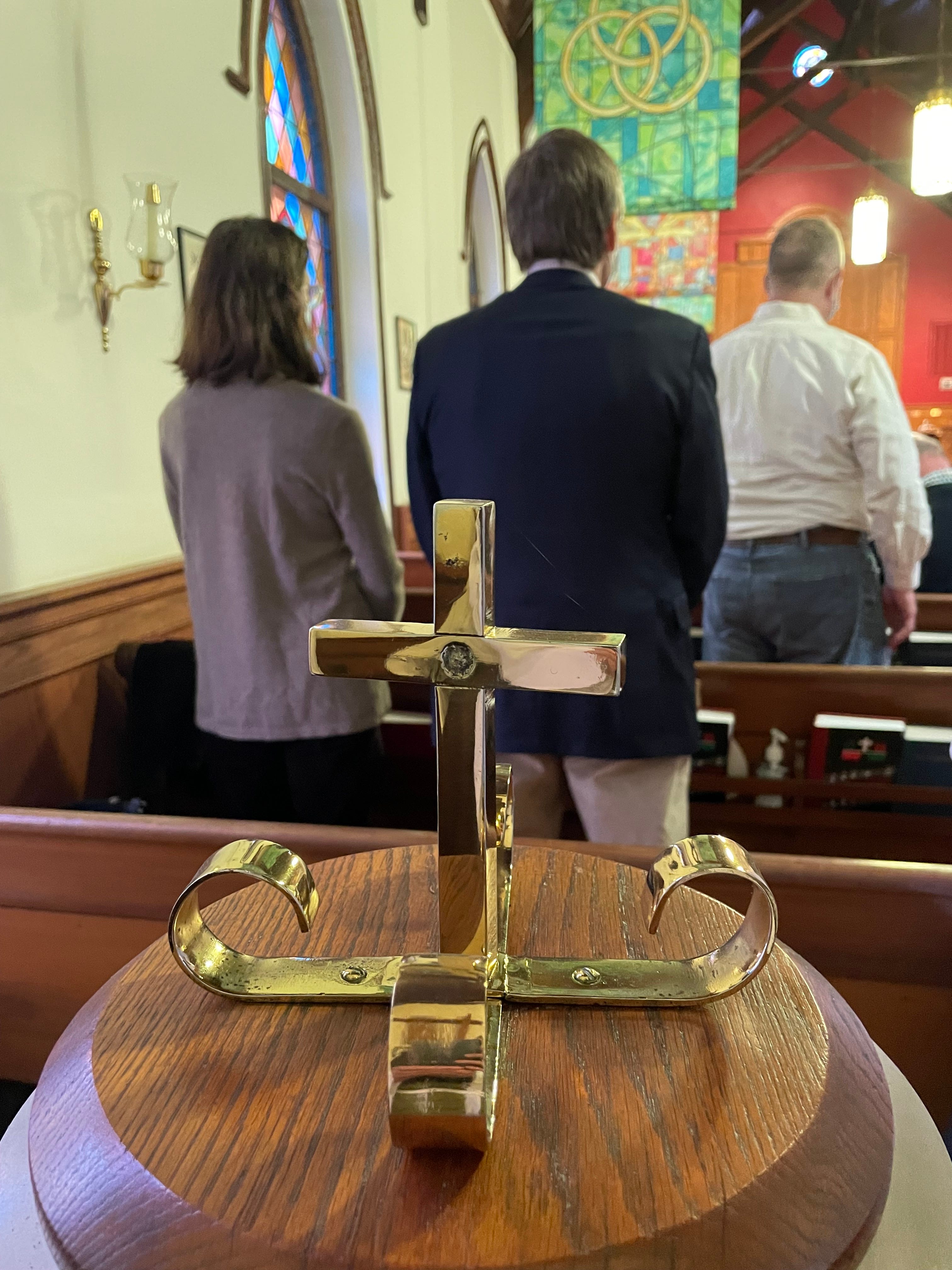
When we are baptized, we are asked five questions about our new life in Christ, and we - or our godparents if we are too young - answer each one with,
‘I will, with God’s help.’
It is never presumed that we enter the life of faith alone, without a community, and especially not alone, without the power of God to light our way, without the hope of God’s Kingdom, on earth as it is in heaven.
Jesus may exhort his followers to ‘be perfect’, but I don’t think that’s an order, I think it is a vision.
And I think it is our work as religious people to have this vision, too.
Not necessarily to make it ourselves. Just to see it.
Which brings me back to the life of the church as we know it:
We could put everything down.
We could, I think, stop trying so hard, stop working so much to save what we know, or to make something happen that we think will take us on a new course, or back to the old one.
Here’s what I think would happen:
As long as there were still some of us who believed, who saw the vision of this impossible, improbable Kingdom of God,
the stories would still be told
the seasons kept
the songs would be sung
the bread would be broken.
We just wouldn’t be able to help ourselves.
As long as the church is still following Jesus, I don’t see how it can ever disappear.
This is what it means to us, and to the world.
We are the ones who hold the vision, who believe in life and miracles and resurrection.
This is God’s work and we are the ones who simply say ‘yes’.
After that, I don’t know what would or what could become of structure and the organization of the church.
But I believe that if we made it our job to believe - and not to try and figure it out -
God would - God will - God is -helping us find a way forward.
We are the place to go, after all, if you want to believe in a world where there is no more need for anger, or lust, or warfare.
We are the people who know it might sound crazy, and are far from writing the manual on how to do it, but we actually do believe in turning the other cheek.
And faith moving mountains, and sight for the blind and life for the dead and no longer having to be afraid.
We are not perfect. But we are meant to be. This we believe.
originally preached on February 16, 2014, at St. Mark’s Episcopal Church in Roxboro, NC.
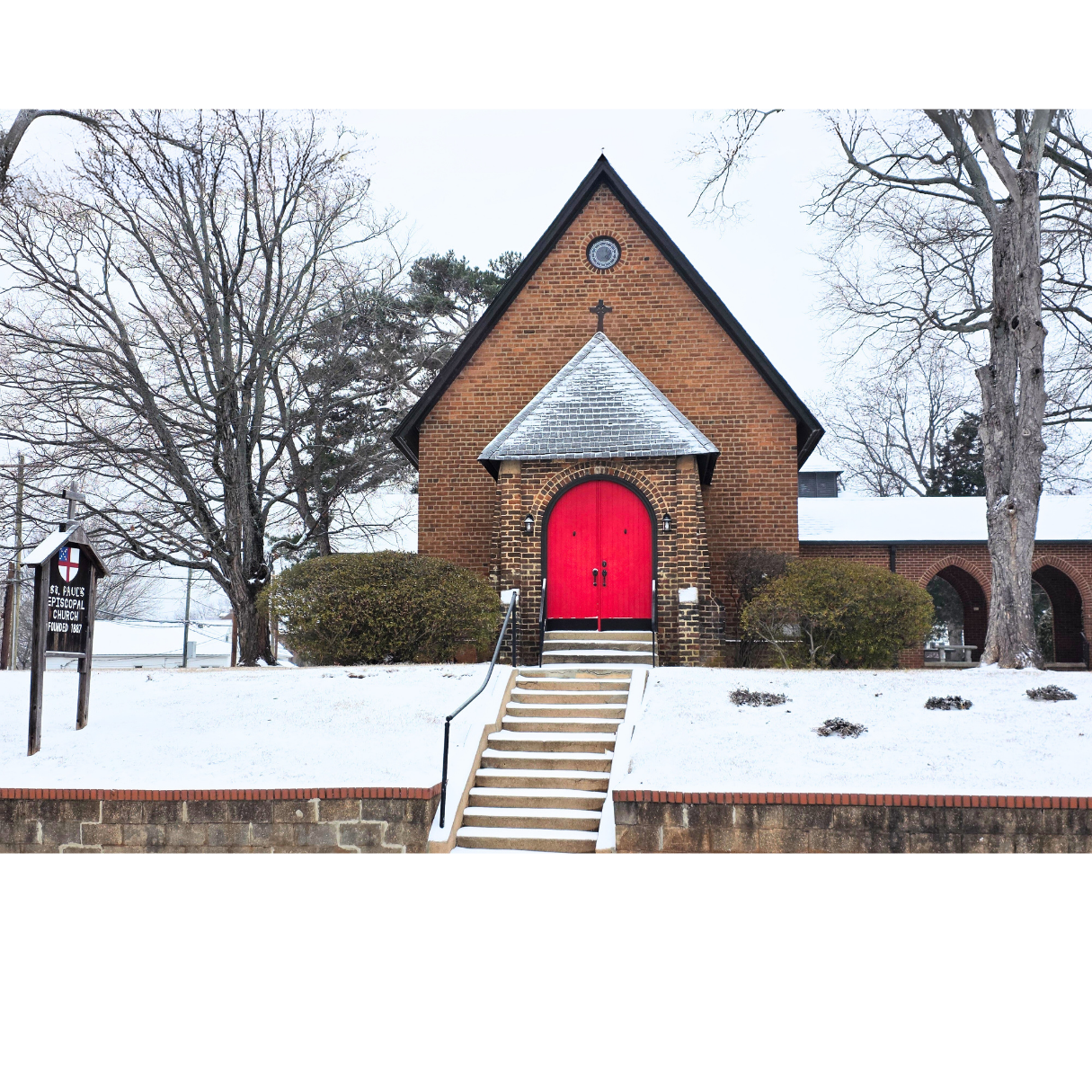
Join us for worship:
If you can’t be here in person, join us online:
At Free Range Priest, we’re reimagining ministry in the digital age.
Subscribe to any (or all!) of these publications to be part of innovative ministry for the future of church.