


Snow, sleet, and ice disrupted our ability to gather in person, but not our worship! We gathered online for Morning Prayer. You can watch the recorded service here. Cathie’s sermon (from the archives - 2008!) is below.
St. Paul’s announcements:
For the message about the cross is foolishness to those who are perishing, but to those of us who are being saved, it is the power of God.
Sometimes, being a Christian can make us feel helpless.
When something goes terribly wrong, when someone is terribly afraid, when we reach out for something, needing a word about where God is in all of this, sometimes it is hard not to feel like answers are inadequate.
‘Things happen for a reason,’ we sometimes say, ‘God has a plan.’
But even as these words leave our lips it is hard to imagine that there is any plan in God’s book that involves suffering for those who are innocent, or over-burdened.
It is hard to believe in a loving God who has plans to make us stronger by first causing us pain, or confusion or frustration.
God is here but not doing anything about our suffering, we seem to end up saying. God could stop this terrible situation but chooses not to.
But why?
And here we get into answers of the variety that we are not good enough, not strong enough, not faithful enough.
And we know that this is not right, not from what we have learned about Jesus, not from what we know about being loved and saved no matter what.
So we say how sorry we are to those who are in trouble, we give of ourselves to those in need, but we start to get a little nervous when pressed about where, exactly, God is when it is all looking very dark outside.
The message about the cross is foolishness.
It is foolish to believe that someone who died two thousand years ago has anything to do with what is going on in our lives today.
It is foolish to think that our belief in this death, and what happened afterwards, is really going to be much help to us in our current problems, is really going to be a solution to what seems unfixable in the moment.
And so it seems only natural that we would try to understand our religion in terms that make more sense – God helps us if we ask right, or think right, or do right.
God has reasons why we suffer. God is on one side and not on the other. Anything to keep us from feeling in the moment, that we believe in Jesus, but we have no idea if that is helping us with anything.
And this is where Paul finds the Corinthians in today’s Epistle reading.
Lacking any firm understanding of the benefits they are receiving from being baptized into the life of Christ, they have factioned into camps according to which of their leaders they like best:
I belong to Apollos. I belong to Cephas. I belong to Paul.
Since real spiritual benefits seem so intangible, they have taken to more fully identifying with the messenger than the message.
And of course they are in conflict.
Because once we decide that only one way can be God’s way, or once we decide that there is a certain definite answer to any number of the mysteries of our life with God, then we are left having to defend them as if our lives, or God’s life, depended on it.
The message about the cross is foolishness.
It is foolishness to believe that we cannot reduce God to a plan, to a mindset that will guarantee us success – that we will be healthy and happy and pain-free and our lives will be full of meaning at all times if we just get this right.
Not that we have given up trying, of course.
I don’t have to tell you about the myriad of ways that apparently spiritual leaders promise us all of these things – money, relationship happiness, good kids, even weight loss, if we abandon the foolishness of not having all the answers, the foolishness of not really knowing for sure, and instead embrace the God of whatever person wrote the newest book on the right way to believe.
On God’s firm opinion about our suffering and how to conquer it, how to get the answers right.
I belong to Apollos. I belong to Cephas. I belong to Paul.
And the thing is, all of these things can work – deciding that suffering is God’s will, praying for our way out of debt or heartbreak, there is nothing wrong with this - until the day that it doesn’t work anymore.
Former Archbishop of Canterbury, Dr. Rowan Williams, writes:
The only defense religion ever has or ever will have against the charge of cozy fantasy is the kind of experience or reflection normally referred to by Christian writers … as the ‘dark night of the spirit... It is the end of religious experience, the very opposite of mysticism… In the middle of all our religious constructs – if we have the honesty to look at it – is an emptiness. It makes nonsense of all religion, conservative or radical, and all piety.
The message about the cross is foolishness to those who are perishing.
When we get to the end of the line or the end of our rope or the end of our understanding of what God is doing in our lives, that is the moment when we give up needing God to make sense and start needing God to save us.
The moment we are willing to believe that God’s opinion and our opinion do not have to align for God to have the power to change our lives, that we are willing to stand in the place where our hearts are open but we are not sure what is going on or where God is in all of this, that is the moment where we go from losing our lives to finding them, from perishing to being saved.
The people who walked in darkness have seen a great light.
We read this in both Isaiah and the Gospel this morning, and it seems to me that sometimes it is the darkness that helps us to recognize the light.
Not that God brings us suffering so that we will come closer to God.
Not that God is trying to teach us something by having this darkness surround us in the first place, but that sometimes it is in the darkness where we really start to realize that there is a place where our ability to find things, to fix things, to make everything right by ourselves comes to an end, and it is there that we realize that anything more that comes to us is not of our doing, we don’t know how it is happening.
There is a moment when we stop pushing the darkness away, and this is where we understand precisely what the message about the cross really is –
that Jesus himself did not push the darkness away, that Jesus himself brought all the darkness to him, became all manner of least and lost and lonely not to give us the answers but to become the answer, to be what shows us that all the troubles of this world cannot overtake the power of love.
It can change the whole way we look at the world.
The message about the cross is foolishness to those who are perishing, but to those of us who are being saved it is the power of God.
There is a moment when we understand that we no longer want to be fixed, we are no longer looking for the answer or the solution to whatever it is that is causing us pain, but we want to be saved. We want to know that there is something larger than our pain.
We want to know that no matter what – life or death, darkness or light, there is something there, that mysterious other that is love beyond anything that we know.
And when we find it we follow, no matter what the cost, because in this we find that all of our suffering is redeemed, in this we know that God never wants us to suffer, God is always here, always leading us to the light, always taking on whatever darkness is in the world, even if we can’t see it at the moment.
We don’t really know how. We don’t really need to know how.
This is the light that Peter and Andrew and James and John threw down their fishing nets for. This is the light that Paul reminded the Corinthians is worth giving up our political factioning for. This is the light that Isaiah promises to the war-weary Israelites.
Sometimes, being a Christian can make us feel helpless.
Sometimes there simply are no words when we feel lost or frightened or alone. But if we can stand to bear these moments, if we can be there without being able to fix them and without moving away, we will find that something, something we don’t really know is there for us, moving us forward, leading us towards the light, bringing us home.
To those of us who are being saved, it is the power of God.
originally preached on January 27, 2008, at St. John’s Episcopal Church in Wichita, KS.
Join us for worship:
If you can’t be here in person, join us online:
At Free Range Priest, we’re reimagining ministry in the digital age.
Subscribe to any (or all!) of these publications to be part of innovative ministry for the future of church.

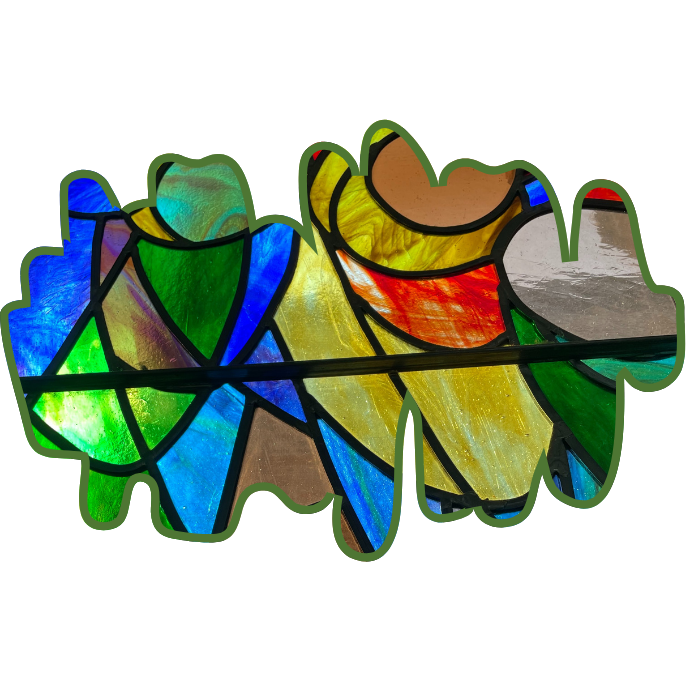

One of the hardest things for many Christians is to let go - of the need to know on what or how or why God works in a certain way. We must let go of our desire for power and control - for answers - and sit with the unknown, often in the dark. It is accepting reality for what it is, and all will be well.